






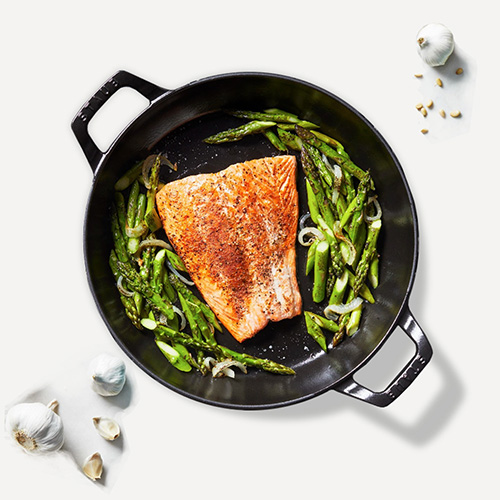


A griddle pan is a flat cooking surface made for foods that need full contact with the heat such as pancakes, eggs, bacon and toasties. Unlike a grill pan, it leaves the surface of the cooked food smooth with no stripes (or char marks).
Bring the barbeque swagger indoors. Grill pans stripe steaks and vegetables with restaurant-style char, flat griddles take charge of pancakes, eggs and toasties and cast iron hold the heat from first hiss to final flip. Since 1977, Peter’s of Kensington has brought Australians quality grill and griddle cookware for searing, sizzling and serving up serious stovetop satisfaction.




Results Per Page 60
Sort ByTitle A - Z
Why a grill or griddle pan earns its place in your kitchen
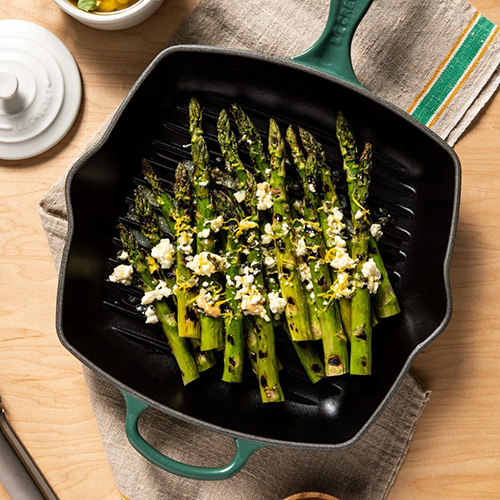
Char marks upstairs, fat drainage downstairs. No backyard barbecue required. A ridged grill pan gives meat and vegetables the striped treatment, while flat a griddle pan keep full contact beneath pancakes, eggs and toasties. Cast iron adds serious heat retention so the first batch and the fifth get the same hot reception.
Grill pan or griddle: which is right for you?
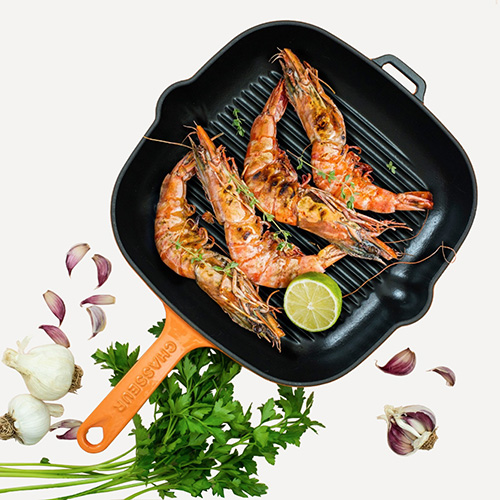
When it comes to grill and griddle cookware, the surface sets the job. Choose a grill pan for steaks, chops and vegetables with raised lines that sear the surface and carry excess fat away. Choose a griddle pan for pancakes, eggs and toasties that need full contact with the heat. Reversible design gives you both, whilst cast iron holds heat and non-stick makes release and clean-up simpler. Cast-iron devotees can look to Le Creuset and Chasseur, while Scanpan and Tefal suit quicker, easier everyday use.
Complete your cookware collection
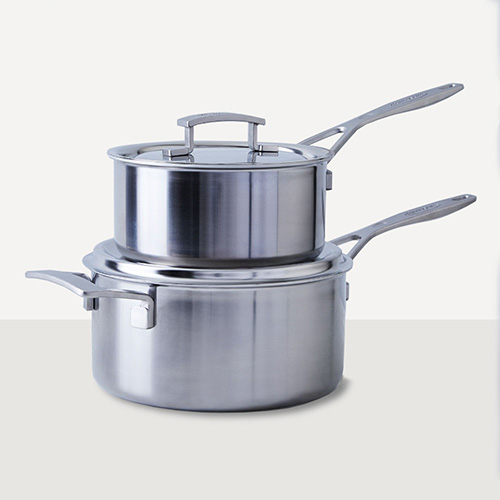
Let grill cookware make its mark, then call in the rest of the stovetop squad. A frypan or skillet handles everyday flipping, a sauté pan gives saucy dinners room to simmer, and a matching cookware set covers the boil, braise and beyond.
Frequently Asked Questions
What is a griddle?
How to season a cast iron griddle?
Wash and dry the griddle pan thoroughly, then rub over a very thin layer of neutral oil. Heat it until the oil just begins to smoke, let it cool and repeat the process a few times to build up a protective cooking surface.